What is GEX and how does it affect stock movement
By Roey Granot · June 8, 2026
Category: explainers
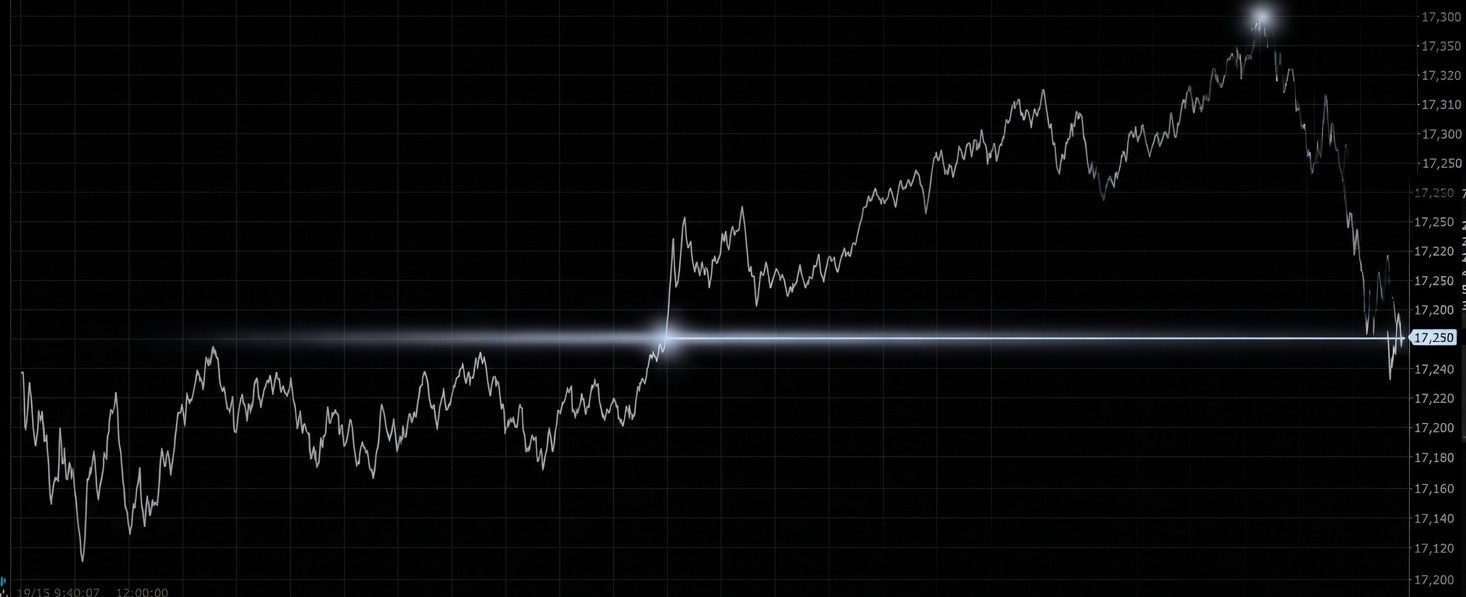
GEX measures how much market maker hedging activity is pushing a stock around - and understanding it changes how you read intraday price behavior.
Key takeaways
The problem Market maker hedging moves stocks in predictable ways that most traders never account for.
Core insight Positive GEX pins stocks near key strikes; negative GEX amplifies moves in whichever direction they start.
Practical outcome Use GEX context to decide whether mean-reversion or momentum fits current market structure better.
There are 20 minutes left in the session. Your position looks clean. The stock is finally moving the way you expected. Then, with no obvious news, no major headline, and no clear catalyst, the move suddenly dies. Price snaps back toward the same strike it has been orbiting all afternoon.
Traders often describe this like the market is being “held,” “pinned,” or manipulated. But in many cases, the explanation is less dramatic and more mechanical. Options market makers are constantly adjusting their hedges, and when enough options exposure is concentrated around certain strikes, that hedging can pull price back toward a level or push it away from it.
That is the basic idea behind gamma exposure, or GEX.
Gamma exposure, or GEX, has become one of the more talked-about concepts in market structure analysis over the last several years. It connects the mechanics of options pricing to real, observable behavior in stocks and indices. Once you understand what it measures and why it matters, you start to see price action differently.
What Is GEX
GEX stands for gamma exposure. It represents the estimated dollar amount of stock that market makers would need to buy or sell in response to a one-point move in the underlying asset, given their current options book.
Delta measures how much an option’s price is expected to change when the stock moves by $1. For example, if a call option has a delta of 0.50, then a $1 move up in the stock should add roughly $0.50 to the option’s price.
Gamma measures how much that delta changes after the stock moves. If that same call has a gamma of 0.15, then after the stock rises $1, its delta may increase from 0.50 to 0.65. That matters because the option is now more sensitive to the next $1 move than it was before.
This is the key mechanic behind GEX: as price moves, delta changes; as delta changes, market makers need to adjust their stock hedges; and when that happens across a large options book, the hedging itself can affect the stock’s movement.
The sign matters. Positive GEX means market makers are net long gamma. Negative GEX means they are net short gamma. That distinction drives very different behavior in the stock.
The Core Mechanism Behind GEX
Market makers are not directional traders. When they sell an option to a customer, they try to stay delta-neutral - meaning they hedge the directional risk immediately by buying or selling shares. As the stock moves, that hedge needs to be adjusted. That adjustment process is called dynamic delta hedging, and it is the engine that GEX describes.
When market makers are long gamma (positive GEX environment), the hedging works against price moves. If the stock rises, their delta goes up, so they sell shares to stay neutral. If the stock falls, their delta drops, so they buy shares. They are always trading against the move. This creates a dampening effect on volatility - the stock gets pushed back toward a center of gravity, often near a high-open-interest strike.
When market makers are short gamma (negative GEX environment), the logic flips. A rising stock forces them to buy more shares to stay hedged. A falling stock forces them to sell more shares. They are chasing the move, amplifying it. This is when you see faster, larger swings and a market that trends more aggressively in one direction.
How GEX Works in Practice
In a high positive GEX environment, you tend to see stocks grind quietly within a range. Realized volatility compresses. Big intraday moves get faded. Traders who try to run momentum strategies find them frustratingly choppy. This is particularly common during low-event stretches like the week before a scheduled Fed meeting or in the period between earnings seasons when large options positions are sitting at nearby strikes and market makers are actively defending their hedges.
In a negative GEX environment, the opposite shows up. Moves extend. Rallies accelerate and selloffs gather speed. The market feels like it has a tailwind in whatever direction it starts moving. This often happens around major events - earnings, macro data releases, FOMC announcements - when a large chunk of open interest expires or when options buyers are loading up on puts, flipping the dealer book short gamma.
The transition between these two regimes is worth watching closely. A stock sitting in a high positive GEX zone that breaks through a key gamma strike can shift dealers to short gamma, causing an abrupt change in how the stock moves.
A Step-by-Step Example
Suppose a large-cap stock is trading near $150 and there is a massive concentration of open interest at the $150 call strike expiring in five days. Market makers who sold those calls are long gamma at that strike.
The stock ticks up to $152. The delta on those calls increases, so market makers now hold more long delta exposure than they want. To rebalance, they sell shares. That selling pressure pushes the stock back toward $150.
The stock dips to $148. The delta on the calls decreases. Market makers are now under-hedged on the long side. They buy shares. That buying lifts the stock back toward $150.
The result is a pinning effect. The stock oscillates around $150 as market makers repeatedly buy dips and sell rips, all in the name of staying neutral. This is what traders mean when they say a stock is "pinned" to a strike heading into expiration. It is not conspiracy or manipulation - it is the mechanical output of hedging math running on a large book.
Now change the setup. Suppose retail traders have been heavily buying puts at $145. Market makers who sold those puts are short gamma below $150. The stock breaks to $148. Their delta exposure drops, and they need to sell shares to stay neutral. That selling accelerates the move down. The stock hits $146, they sell more, the move extends to $144. The downside accelerates because the hedging is now fuel, not a brake.
Why GEX Happens
GEX exists because options markets have grown large enough to move the tail that wags the dog. The options market on major indices and large-cap stocks now regularly sees notional volumes that dwarf the underlying equity market on a given day. Market makers intermediate most of that flow, and they manage their books continuously through share-level hedging. The size of that hedging activity is substantial enough to show up in price action.
The rise of short-dated options - zero-days-to-expiry (0DTE) contracts in particular - has made GEX dynamics more acute and faster-moving. High-gamma positions in very short-dated options expire and reset constantly, which means the regime can shift intraday. What looked like a pinned market in the morning can become a trending market by the afternoon if enough of that open interest rolls off.
How GEX Differs From Vanna and Charm
GEX gets grouped with several other options-driven flow concepts, and they are related but distinct. Vanna measures how delta changes with implied volatility, not price. When implied volatility drops sharply - as it often does after an event resolves - market makers holding positions with significant vanna exposure have to adjust their hedges even if price has barely moved. That can create buying or selling pressure independent of where the stock went.
Charm measures how delta changes with time passing. As options approach expiration, their deltas drift, and market makers rebalance accordingly. This is the mechanism behind the end-of-week flows that some traders track on Fridays near expiration.
GEX specifically captures the price-driven hedging impulse. It is the most direct link between where the stock is right now and what market makers are mechanically forced to do next. Vanna and charm matter more over longer time horizons or when volatility is shifting dramatically. GEX is the intraday and short-term signal.
How Traders Use GEX
Traders who track GEX use it primarily in two ways: identifying likely range-bound conditions and identifying conditions where momentum is more likely to persist.
In high positive GEX environments, mean-reversion approaches tend to perform better. Selling moves that extend away from major gamma strikes, fading breakouts that lack volume confirmation, and avoiding trend-following setups are all reasonable adjustments. The market has a structural reason to pull back toward the zone of maximum gamma.
In negative GEX environments, momentum and breakout strategies see better conditions. Stops should be wider because the moves extend. The market does not get the same natural dampening from dealer hedging, so when something starts moving, it is worth giving it room.
Some traders also use GEX levels to identify significant strikes. A strike with outsized open interest and high gamma can act as a magnet heading into expiration - or as a potential accelerant if it gets breached decisively. Tracking where the largest GEX concentrations are sitting, relative to current price, gives you a rough map of where dealer hedging is most active.
What GEX Does Not Tell You
GEX is a structural input, not a trading signal on its own. It does not tell you which direction the stock will move. A negative GEX environment means moves will be amplified - it does not tell you whether the amplified move will be up or down. You still need a directional thesis or a catalyst to trade against.
GEX estimates also depend heavily on assumptions about who is on which side of the trade. The standard approach assumes market makers are short options and customers are long. That is broadly reasonable but not always accurate. When institutions are selling covered calls in size or when there is significant two-way flow, the assumption breaks down and the GEX estimate becomes less reliable.
The data quality matters too. Open interest data is delayed, and intraday changes in positioning are not fully captured until the following day. Real-time GEX estimates are approximations, not precise readings. They are most useful as context for what type of market behavior to expect, not as signals for exact entry and exit points.
GEX is one of the more useful lenses for understanding why a market behaves the way it does on a given day. When a stock refuses to move despite clear news flow, or when a small catalyst turns into a 5% intraday swing, dealer hedging mechanics are often part of the explanation. Getting familiar with how gamma exposure shapes those outcomes makes you a more grounded reader of price action - and helps you stop fighting the tape when the tape is actually doing exactly what the options market is telling it to do.
Frequently Asked Questions
What does GEX mean in trading?
GEX stands for gamma exposure. It measures the estimated dollar value of shares that options market makers would need to buy or sell for every one-point move in the underlying stock, based on their current options book. Positive GEX tends to suppress volatility; negative GEX tends to amplify it.
What does GEX mean in trading?
GEX stands for gamma exposure. It measures the estimated dollar value of shares that options market makers would need to buy or sell for every one-point move in the underlying stock, based on their current options book. Positive GEX tends to suppress volatility; negative GEX tends to amplify it.
How does positive GEX affect stock movement?
When GEX is positive, market makers are net long gamma. As the stock rises, they sell shares to stay delta-neutral; as it falls, they buy shares. This creates a dampening effect - stocks tend to stay range-bound near high-open-interest strikes, and large moves get faded naturally through the hedging process.
How does positive GEX affect stock movement?
When GEX is positive, market makers are net long gamma. As the stock rises, they sell shares to stay delta-neutral; as it falls, they buy shares. This creates a dampening effect - stocks tend to stay range-bound near high-open-interest strikes, and large moves get faded naturally through the hedging process.
What happens when GEX turns negative?
Negative GEX means market makers are net short gamma. Their hedging now chases price moves rather than countering them - they buy as the stock rises and sell as it falls. This amplifies moves in both directions, making trending conditions and larger intraday swings more likely.
What happens when GEX turns negative?
Negative GEX means market makers are net short gamma. Their hedging now chases price moves rather than countering them - they buy as the stock rises and sell as it falls. This amplifies moves in both directions, making trending conditions and larger intraday swings more likely.
Is GEX the same as options open interest?
No. Open interest tells you how many contracts are outstanding at a given strike. GEX uses open interest as an input but weights it by each contract's gamma, which varies by strike and expiration. A strike with high open interest in long-dated options contributes much less to GEX than the same open interest in short-dated, near-the-money options.
Is GEX the same as options open interest?
No. Open interest tells you how many contracts are outstanding at a given strike. GEX uses open interest as an input but weights it by each contract's gamma, which varies by strike and expiration. A strike with high open interest in long-dated options contributes much less to GEX than the same open interest in short-dated, near-the-money options.
Can retail traders actually use GEX to improve their trading?
Yes, with realistic expectations. GEX is most useful as context - it helps you understand whether the current environment favors mean-reversion or momentum strategies. In high positive GEX conditions, fading extended moves tends to work better. In negative GEX conditions, giving trades more room to run makes more sense. GEX alone does not tell you direction, so it works best alongside a clear directional thesis.
Can retail traders actually use GEX to improve their trading?
Yes, with realistic expectations. GEX is most useful as context - it helps you understand whether the current environment favors mean-reversion or momentum strategies. In high positive GEX conditions, fading extended moves tends to work better. In negative GEX conditions, giving trades more room to run makes more sense. GEX alone does not tell you direction, so it works best alongside a clear directional thesis.